Shop Weighing & Label Printing Scales
Choosing the Right Shop Weighing Scale
The right scale depends on what you sell, how you serve customers and whether you need to calculate prices or print labels. Consider your everyday weighing tasks alongside capacity, accuracy and available counter space.
Weighing, Price Computing or Label Printing?
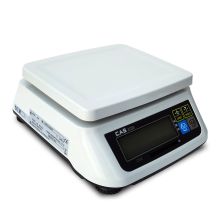
A weighing-only scale displays weight, making it useful for tasks such as portioning or preparing ingredients.
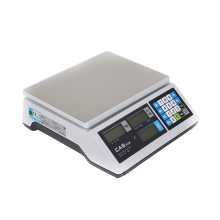
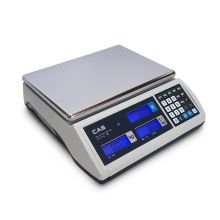
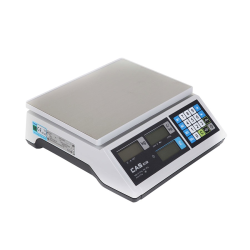
A price-computing scale calculates the selling price from the weight and price per kilogram. This can suit businesses selling loose products over the counter.
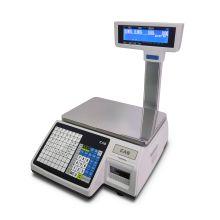
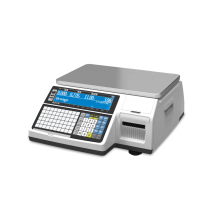
A label-printing scale can produce labels for weighed goods. Check the model’s supported label formats, product information and programming options before buying.
Capacity and Weighing Increments
Choose a capacity that accommodates your heaviest expected load, including any container or scoop.
Also check the weighing increments—the steps in which the displayed weight changes. A higher-capacity scale does not necessarily offer the same increments as a smaller model, and some scales use different increments across their weighing range.
Flat Plate or Scoop?
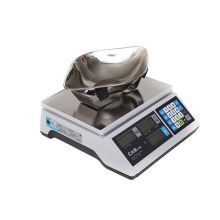
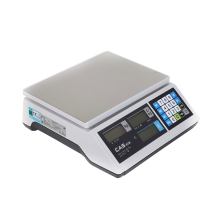
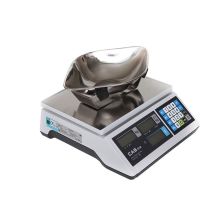
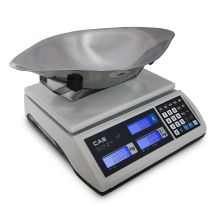
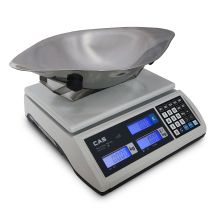
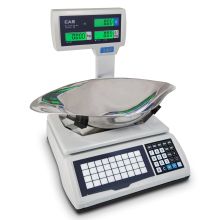
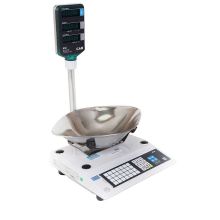
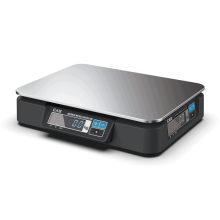
A flat plate provides a versatile surface for products, trays and containers. A scoop can make loose goods easier to handle: shallow designs may suit sweets, while larger scoops can accommodate bulkier produce.
Check whether the scoop and supporting cradle are included, and remember that their weight affects the available weighing capacity.
Tare and Customer Displays
The tare function allows you to exclude the weight of a suitable container when weighing its contents. Check the tare range and how it affects the maximum load.
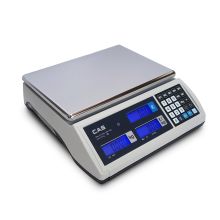
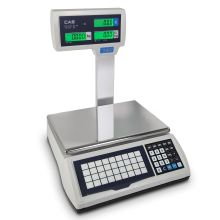
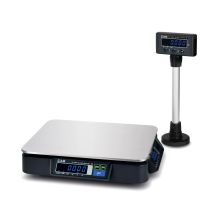
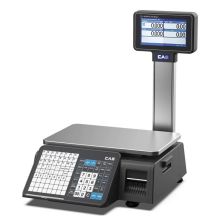
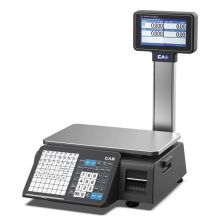
For counter service, consider a scale with displays that are easy for both the operator and customer to read. Compare display positions and the information shown, such as weight, unit price and total price.
Approval for Your Intended Use
Check the individual product’s approval details and suitability for your intended task, particularly when the measured weight determines what the customer pays. Do not assume that every digital scale is suitable for selling goods by weight.
If you are unsure, ask our team about the model you are considering before ordering.
Power and Working Environment
Check whether the scale uses mains power, batteries or both, and whether the required power supply or battery is included. For mobile use, consider charging arrangements and the manufacturer’s stated battery runtime.
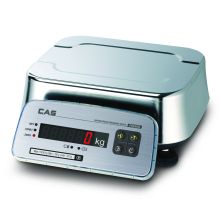
Measure your counter space and consider cleaning requirements. If the scale will be exposed to moisture or demanding conditions, check its stated protection and cleaning instructions.
Labels and EPOS Connectivity
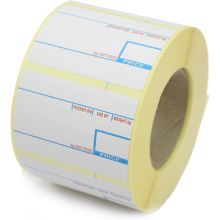
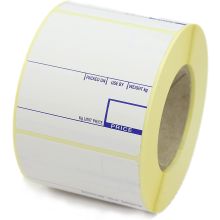
For label-printing models, check compatible label sizes, replacement consumables and how product details are entered or updated.
If you want to connect a scale to an EPOS system, confirm compatibility with the exact scale, connection and software. A suitable-looking port alone does not guarantee that the devices will work together.
Need Help Choosing?
Call 0800 1615 622 and tell us what you weigh, your typical quantities and whether you need price calculation, labels or EPOS connectivity. Cash Register Group can help you compare suitable options for your business.